

Headaches don’t always come from physical strain.
Sometimes, they come from:
- a constantly active mind
- emotional pressure
- unprocessed stress
- mental overload that never truly settles
You may notice this pattern:
You’re not physically exhausted…
But your head feels heavy, tight, or strained.
If you prefer natural solutions over medication, meditation can help—not by masking the pain, but by addressing what’s creating it.
Why You’re Experiencing Frequent Headaches
Not all headaches are medical in origin.
Many are stress-induced or tension-based, caused by:
- Overthinking and mental fatigue
- Emotional suppression
- Continuous screen exposure
- Lack of mental breaks
- Subtle anxiety running in the background
Your mind stays “on” all day…
And your body eventually expresses that as tension.
The Mind-Body Connection Behind Headaches
When your mind is overloaded, your body responds.
You may not notice it immediately, but internally:
- Your jaw tightens
- Your shoulders stiffen
- Your forehead holds subtle pressure
- Your nervous system stays activated
Over time, this creates:
Tension headaches
Heaviness in the head
pressure behind the eyes
This is not just physical.
It’s a regulated vs. unregulated nervous system issue.
Why Medication Doesn’t Always Solve the Problem
Medication can reduce the symptom.
But it doesn’t address:
- why your mind is constantly active
- why your body is holding tension
- why stress keeps accumulating
So the cycle continues:
Relief → buildup → headache → relief again
Meditation helps break this cycle at the root.
How Meditation Helps with Headaches and Tension
Meditation works differently.
It doesn’t fight the headache—it changes the internal state that creates it.
1. Releases Built-Up Mental Pressure
Most people don’t pause during the day.
Meditation creates that pause.
It allows your mind to:
- slow down
- process thoughts
- release accumulated pressure
This reduces the intensity of mental strain that leads to headaches.
2. Relaxes Physical Tension in the Body
When your mind relaxes, your body follows.
With regular meditation:
- muscle tightness reduces
- jaw and forehead soften
- shoulders drop naturally
This directly impacts tension headaches.
3. Regulates Your Nervous System
Chronic tension often comes from a system that is always “on.”
Meditation shifts your body from:
- alert mode
To: - relaxed, restorative mode
This reduces the frequency of stress-related headaches.
4. Breaks the Overthinking Loop
Many headaches are not from “too many thoughts”—but repetitive thinking.
Meditation helps you:
- step out of loops
- observe thoughts instead of engaging
- reduce mental friction
Less friction = less pressure.
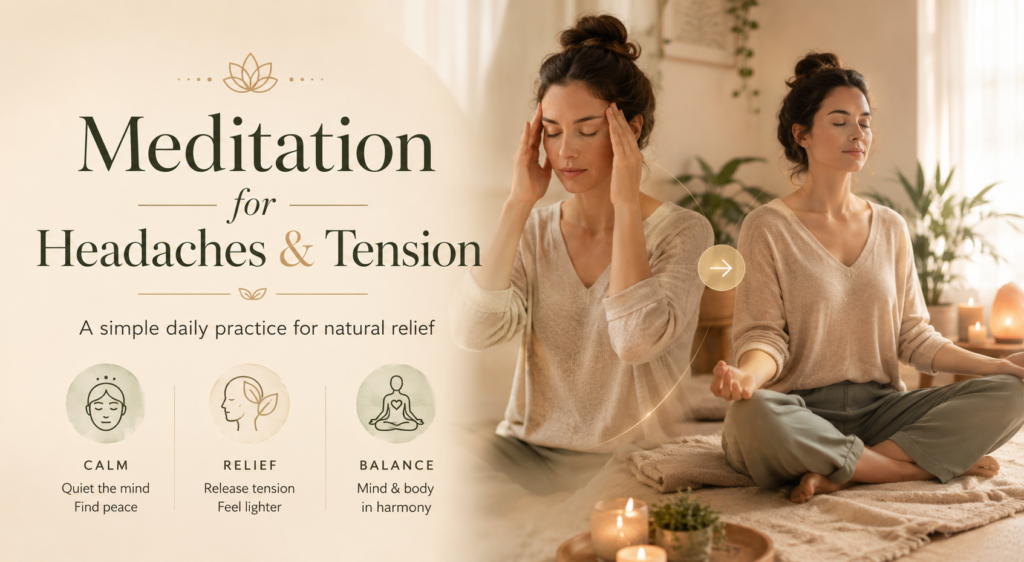
A Simple Daily Meditation Practice for Headaches
This is not complicated—and that’s the point.
Step 1: Sit comfortably
Keep your spine relaxed but upright.
Step 2: Close your eyes
Let your body settle naturally.
Step 3: Bring awareness to your breath
No control—just observe.
Step 4: Scan your head and face
Notice areas of tightness:
- forehead
- eyes
- jaw
Gently relax them.
Step 5: Stay for 7–10 minutes
If thoughts come, let them pass without resistance.
Important:
Don’t meditate only when you have a headache.
Practice daily to prevent buildup.
When You’ll Start Noticing a Difference
With consistent practice, you may observe:
- Reduced frequency of headaches
- Less intensity when they occur
- Faster recovery
- A calmer baseline state
- Reduced mental fatigue
This is not instant—but it is sustainable.
Common Mistakes to Avoid
Using Meditation Only as a Rescue Tool
Meditation works best as a daily reset—not a last-minute fix.
Expecting Immediate Relief
Some relief may come quickly, but deeper change builds over time.
Ignoring Lifestyle Triggers
Meditation helps—but also be aware of:
- screen time
- hydration
- rest patterns
Who This Helps Most
This approach works especially well if:
- your headaches increase during stress
- you feel mental heaviness often
- you prefer natural healing methods
- Your lifestyle involves high mental activity.
Can meditation really help with headaches?
Yes—especially tension and stress-related headaches. It reduces the root causes like mental overload and physical tightness.
How often should I meditate for results?
Daily practice (even 5–10 minutes) is more effective than occasional long sessions.
What if I get distracted during meditation?
That’s normal. The benefit comes from returning your attention—not from staying perfectly focused.
Is this a replacement for medical treatment?
Meditation supports natural relief, but persistent or severe headaches should also be medically evaluated.
Conclusion
Headaches are often your system’s way of saying:
“Something hasn’t slowed down.”
Meditation gives your mind and body that missing space.
Not by forcing relaxation—
But by allowing it to happen naturally.
When your internal pressure reduces, your external symptoms follow.
If you want to learn how to use meditation to reduce tension, calm your mind, and create a stable inner state, join our guided meditation sessions.
Learn how to:
- release mental and emotional pressure
- build a daily calming practice
- reduce stress-based symptoms naturally
👉 Start here: https://calmpreneur.in/cpmt