

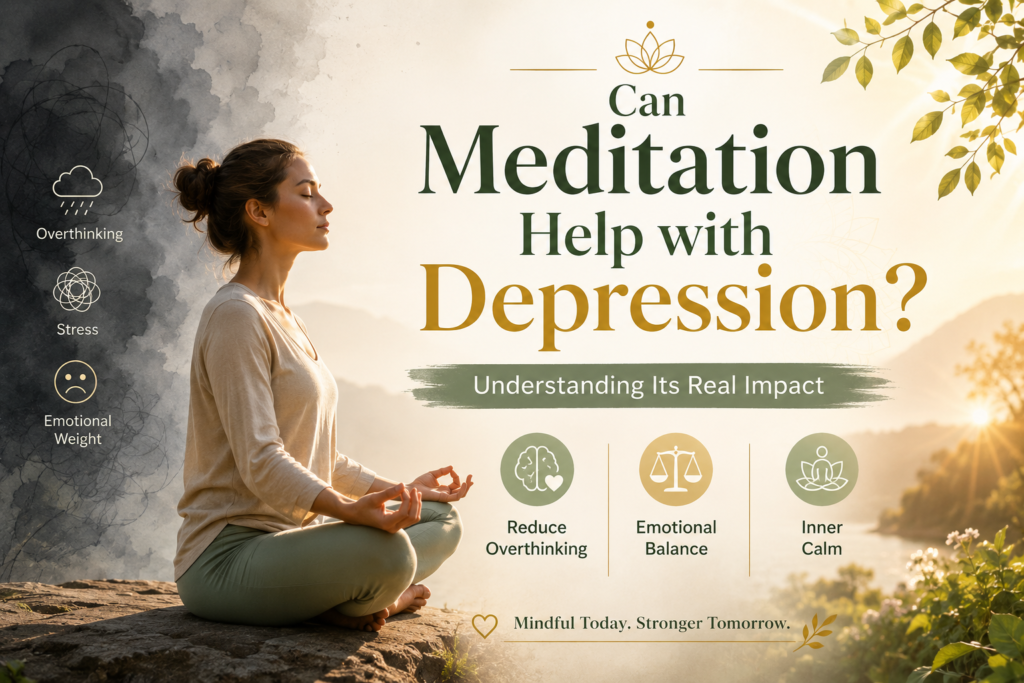
If you’re struggling with low mood, lack of motivation, emotional heaviness, or persistent negative thoughts, you’ve probably searched for natural ways to feel better.
One question that often comes up is:
“Can meditation help with depression?”
The short answer is: Yes, meditation can help—but it’s important to understand how it helps and what it can realistically do.
Meditation is not a magic cure for depression. However, it can become a powerful tool that helps you manage your thoughts, regulate emotions, reduce stress, and create more mental space during difficult periods.
Let’s explore the real impact meditation can have on depression and emotional well-being.
Understanding Depression Beyond Sadness
Many people think depression simply means feeling sad.
In reality, depression can show up as:
- Constant fatigue
- Lack of motivation
- Emotional numbness
- Feeling disconnected from life
- Negative self-talk
- Difficulty concentrating
- Sleep disturbances
- Loss of interest in activities once enjoyed
For many people, depression feels less like sadness and more like carrying a heavy weight every day.
Why Depression Feels So Hard to Break Out Of
When you’re depressed, your mind often gets trapped in repetitive thought patterns.
You may find yourself thinking:
- “Nothing will change.”
- “I’m not good enough.”
- “What’s the point?”
- “Things will always be like this.”
The more these thoughts repeat, the stronger they become.
Over time, your brain starts treating these thoughts as facts rather than temporary mental experiences.
This is where meditation can make a meaningful difference.
How Meditation Helps with Depression
Meditation doesn’t force positive thinking.
Instead, it helps you develop a healthier relationship with your thoughts and emotions.
1. It Creates Distance from Negative Thoughts
One of the biggest challenges in depression is becoming completely identified with negative thinking.
Meditation teaches you to observe thoughts instead of automatically believing them.
Instead of:
“I am a failure.”
You begin noticing:
“I’m having a thought that I’m a failure.”
This small shift creates emotional space and reduces the power of negative thinking.
2. It Calms an Overactive Mind
Many people with depression experience constant mental noise.
Their minds are stuck replaying:
- Past mistakes
- Regrets
- Self-criticism
- Worries about the future
Meditation trains attention to return to the present moment.
As this skill develops, mental overwhelm often begins to decrease.
3. It Helps Regulate the Nervous System
Depression is not only psychological.
It also affects the body.
Many people experience:
- Low energy
- Physical tension
- Restlessness
- Sleep disruptions
Meditation activates the body’s relaxation response, helping the nervous system move away from chronic stress patterns.
This creates a more supportive internal environment for emotional recovery.
4. It Increases Self-Awareness
Many emotions remain buried beneath daily distractions.
Meditation allows you to become more aware of:
- Emotional triggers
- Behavioral patterns
- Thought habits
Awareness is often the first step toward meaningful change.
You cannot transform what you don’t recognize.
5. It Encourages Self-Compassion
People experiencing depression are often incredibly hard on themselves.
Meditation helps cultivate:
- Patience
- Acceptance
- Self-kindness
Over time, many practitioners notice that their internal dialogue becomes less critical and more supportive.
What Research Suggests About Meditation and Depression
Research has found that mindfulness-based meditation practices may help reduce symptoms of depression, particularly when practiced consistently.
Meditation has been associated with:
- Reduced rumination
- Improved emotional regulation
- Lower stress levels
- Better resilience during difficult situations
Many therapists now incorporate mindfulness practices alongside traditional treatment approaches because of these benefits.
What Meditation Cannot Do
It’s important to be realistic.
Meditation is helpful, but it is not a replacement for professional support when needed.
Meditation cannot:
- Instantly remove depression
- Replace therapy in severe cases
- Solve underlying life circumstances on its own
- Eliminate difficult emotions completely
Instead, meditation provides tools that help you navigate those experiences more effectively.
A Simple Meditation Practice for Emotional Well-Being
If you’re new to meditation, start small.
Step 1: Find a Quiet Place
Sit comfortably without distractions.
Step 2: Close Your Eyes
Allow your body to relax naturally.
Step 3: Focus on Your Breath
Notice each inhale and exhale.
Don’t force anything.
Step 4: Observe Thoughts
When thoughts arise, simply notice them.
Avoid judging or fighting them.
Step 5: Return to Your Breath
Each time your mind wanders, gently return your attention.
Practice for 5–10 minutes daily.
Consistency matters more than duration.
Common Mistakes People Make
Expecting Immediate Results
Meditation is a skill that develops over time.
Small improvements often come before major shifts.
Trying to Stop Thoughts Completely
The goal is not to eliminate thoughts.
The goal is to become less controlled by them.
Only Meditating When Feeling Bad
Meditation works best as a daily habit rather than an emergency tool.
Who Can Benefit Most?
Meditation may be particularly helpful if you:
- Experience mild to moderate depressive symptoms
- Struggle with negative thinking
- Feel emotionally overwhelmed
- Want a natural way to support mental well-being
- Are looking to complement therapy or other forms of support
Can meditation cure depression?
Meditation is not considered a cure for depression. However, it can significantly support emotional well-being and help reduce symptoms when practiced consistently.
How long does it take for meditation to help with depression?
Some people notice benefits within a few weeks, while deeper changes often develop over months of regular practice.
Which meditation is best for depression?
Mindfulness meditation, guided meditation, loving-kindness meditation, and breath awareness practices are commonly recommended.
Should I stop therapy if I meditate?
No. Meditation works best as a supportive practice and should not replace professional care when it is needed.
Conclusion
Meditation may not eliminate every challenge that comes with depression, but it can help you develop something incredibly valuable:
The ability to experience difficult thoughts and emotions without being completely overwhelmed by them.
Over time, meditation can help you:
- Reduce mental clutter
- Build emotional resilience
- Create inner calm
- Develop greater self-awareness
- Support your overall mental well-being
The goal isn’t to become happy all the time.
The goal is to create enough space within yourself that healing becomes possible.
Ready to Experience the Benefits of Meditation?
If you want to learn how to teach meditation techniques that support people dealing with stress, anxiety, and depression, join the Calmpreneur Meditation Trainer Bootcamp.
You’ll learn:
How to teach meditation for emotional healing and mental well-being.
Techniques that help people manage stress, anxiety, and depressive thoughts.
How to confidently guide meditation sessions for individuals and groups.
The skills to become a certified Meditation Trainer and create a positive impact in others’ lives.
👉 Join here: https://calmpreneur.in/cpmt