

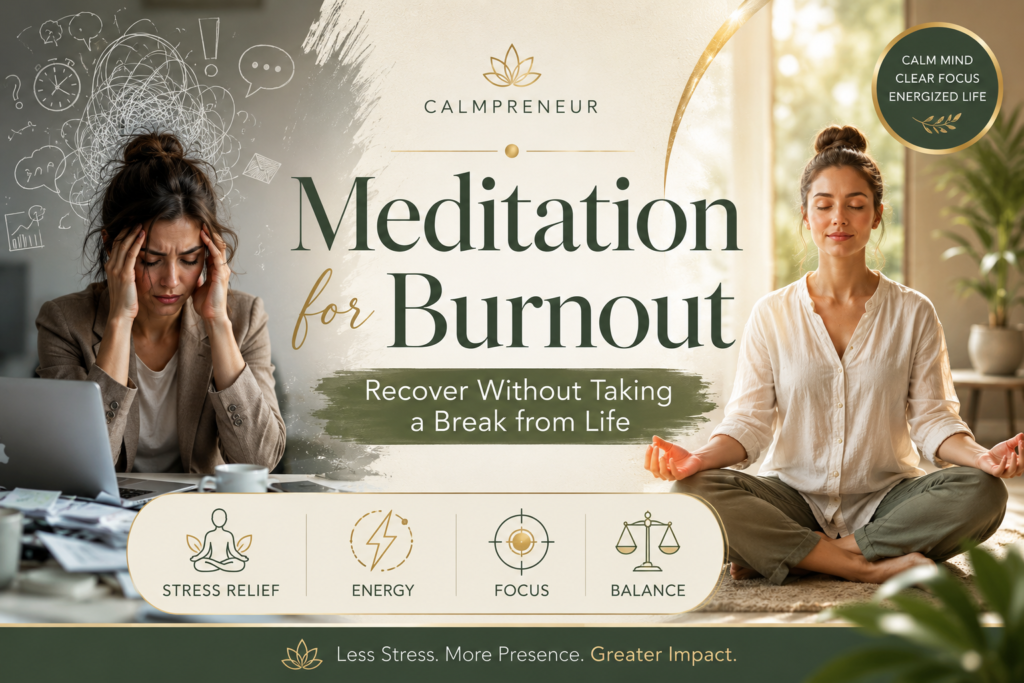
Feeling Exhausted Even After Rest?
You sleep.
You take a weekend off.
You try to relax.
Yet somehow, you still feel tired.
Not physically tired.
Mentally and emotionally drained.
If that sounds familiar, you may not need another vacation—you may be experiencing burnout.
Burnout has become increasingly common among professionals, entrepreneurs, caregivers, and even people who genuinely love what they do.
The good news?
Recovery doesn’t always require quitting your job, disappearing to the mountains, or taking months off.
Sometimes, what your mind and body need is a way to reset from within.
That’s where meditation can help.
What Is Burnout?
Burnout is more than stress.
Stress feels like having too much to do.
Burnout feels like having nothing left to give.
Common signs include:
- Constant fatigue
- Lack of motivation
- Feeling emotionally numb
- Difficulty concentrating
- Irritability
- Poor sleep
- Reduced productivity
- Feeling disconnected from your work and relationships
Many people try to push through burnout.
Unfortunately, that often makes it worse.
Why Burnout Happens
Most people assume burnout comes from working too much.
But that’s only part of the story.
Burnout often happens when:
- You are constantly “on”
- You rarely slow down mentally
- You ignore your emotional needs
- You feel responsible for everything
- You spend more energy than you replenish
Over time, your nervous system gets stuck in survival mode.
Your body is working.
Your mind is working.
But your internal resources are running low.
Can Meditation Help with Burnout?
Yes.
Meditation helps address one of the root causes of burnout:
A chronically overstimulated nervous system.
While meditation won’t instantly solve workload issues, it helps your mind and body recover from the constant state of pressure that burnout creates.
How Meditation Supports Burnout Recovery
1. It Shifts Your Body Out of Survival Mode
When you’re burned out, your nervous system often stays in a state of stress.
Your brain is constantly scanning for:
- deadlines
- problems
- responsibilities
- unfinished tasks
Meditation activates the body’s relaxation response.
This helps reduce the feeling that you need to be alert every second of the day.
2. It Gives Your Mind a Break
Many people think they’re resting when they stop working.
But mentally, they’re still:
- planning
- worrying
- overthinking
- replaying conversations
Meditation creates moments where your attention is no longer consumed by mental noise.
This mental space is often what burned-out individuals are missing.
3. It Reduces Emotional Exhaustion
Burnout isn’t just physical.
It’s emotional.
When you’re constantly supporting others, solving problems, or managing responsibilities, emotional fatigue builds up.
Meditation helps you reconnect with yourself instead of continuously reacting to external demands.
4. It Improves Sleep Quality
One of the most frustrating symptoms of burnout is being tired but unable to rest properly.
Many people experience:
- racing thoughts at night
- restless sleep
- waking up exhausted
Meditation helps calm mental activity, making it easier for the body to enter deeper states of rest.
5. It Restores Focus and Clarity
Burnout often makes simple decisions feel difficult.
You may feel:
- mentally scattered
- forgetful
- unproductive
Meditation trains your attention and helps reduce cognitive overload.
This allows you to think more clearly and make decisions with less effort.
Why Taking a Break Isn’t Always Enough
Many people take a few days off expecting burnout to disappear.
Then they return to work feeling exactly the same.
Why?
Because burnout isn’t only caused by your schedule.
It’s also caused by your internal state.
If your mind remains overwhelmed, stress simply returns the moment life becomes busy again.
Meditation helps create resilience that stays with you even when life is demanding.
A Simple Meditation Practice for Burnout
You don’t need an hour a day.
Start with just 10 minutes.
Step 1: Sit Comfortably
Choose a quiet space where you won’t be interrupted.
Step 2: Close Your Eyes
Allow your shoulders and jaw to relax.
Step 3: Focus on Your Breathing
Notice each inhale and exhale.
Don’t try to change it.
Simply observe.
Step 4: Let Thoughts Come and Go
Instead of fighting thoughts, notice them and return your attention to your breath.
Step 5: End with Gratitude
Before opening your eyes, ask yourself:
“What do I need more of right now?”
Listen without judgment.
Common Burnout Recovery Mistakes
Waiting Until You’re Completely Exhausted
Recovery is easier when you act early.
Meditation works best as prevention and recovery.
Believing You Must Be Productive All the Time
Constant productivity is one of the fastest routes to burnout.
Your mind needs moments of stillness.
Thinking Self-Care Is Selfish
Taking care of your mental and emotional health allows you to show up more effectively in every area of life.
Who Can Benefit Most?
Meditation can be especially helpful if you are:
- A business owner
- A working professional
- A caregiver
- A healer or wellness practitioner
- A parent managing multiple responsibilities
- Someone experiencing chronic stress.
Can meditation cure burnout?
Meditation is not a cure, but it can significantly support recovery by reducing stress, calming the nervous system, and improving emotional resilience.
How long should I meditate for burnout recovery?
Even 10–15 minutes daily can make a noticeable difference when practiced consistently.
How quickly will I see results?
Some people feel calmer after a single session, while deeper benefits typically develop over several weeks of regular practice.
Is meditation better than taking time off?
Both can help. However, meditation builds internal resilience that supports long-term recovery even after you return to daily responsibilities.
Conclusion
Burnout isn’t a sign that you’re weak.
It’s often a sign that you’ve been strong for too long without enough recovery.
Meditation won’t remove every responsibility from your life.
But it can change how your mind and body respond to those responsibilities.
Instead of constantly running on empty, you learn how to recharge from within.
And sometimes, that’s exactly what recovery looks like.
Ready to Build a Life and Career Without Constant Burnout?
Many wellness professionals, meditation teachers, and aspiring coaches struggle because they focus on helping others while neglecting their own mental well-being.
Inside the Calmpreneur Meditation Bootcamp, you’ll learn:
Practical meditation techniques for stress and burnout recovery
How to create a sustainable meditation practice
Tools to regulate your nervous system naturally
How to build a meaningful meditation career without overwhelming yourself
A step-by-step framework to grow with purpose and balance
👉 Join the Calmpreneur 3-day bootcamp: https://calmpreneur.in/cpmt
Learn how to create impact, build a fulfilling career, and stay calm while doing it.