

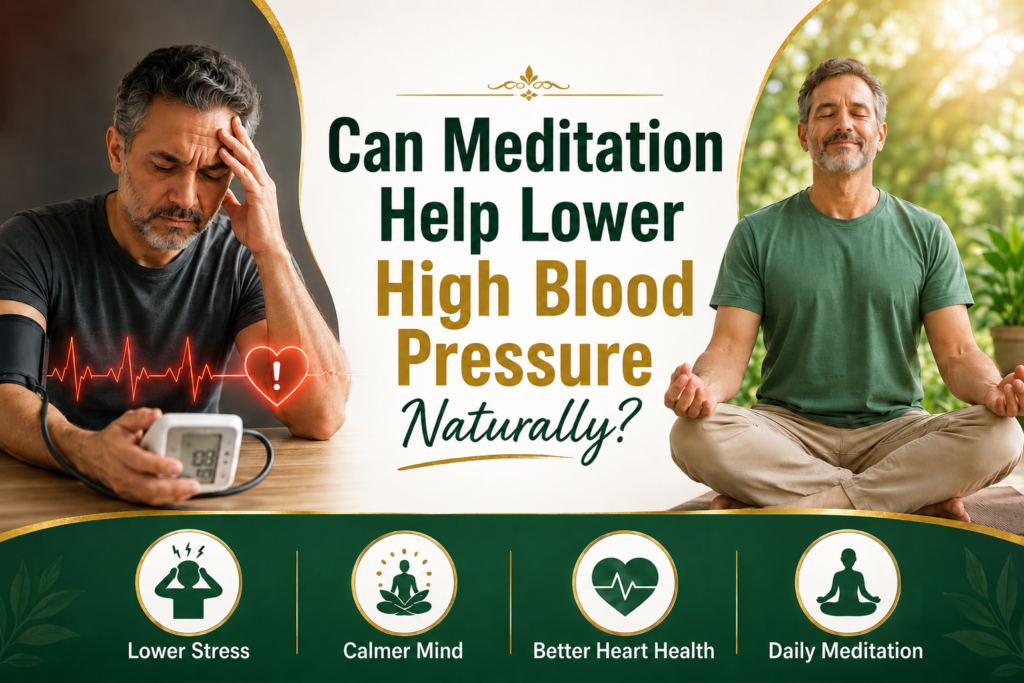
High blood pressure (hypertension) is often called the “silent killer” because it can develop without noticeable symptoms while increasing the risk of heart disease, stroke, and kidney problems.
Most people focus on medication, diet, and exercise—and rightly so. But there’s another factor that’s often overlooked:
Chronic stress.
When your mind is constantly under pressure, your body feels it too.
If you’ve been searching for natural ways to support healthy blood pressure alongside your doctor’s advice, meditation may be one of the simplest and most effective daily habits you can adopt.
But can meditation actually lower blood pressure?
Let’s understand what science and experience tell us.
How Stress Affects Blood Pressure
Imagine you’re running late for an important meeting.
Your heart starts racing.
Your breathing becomes shallow.
Your muscles tense up.
This is your body’s fight-or-flight response, triggered by stress hormones like adrenaline and cortisol.
While this response is helpful in emergencies, many people experience it daily because of:
- Work pressure
- Financial stress
- Family responsibilities
- Lack of sleep
- Constant digital distractions
- Anxiety and overthinking
When stress becomes chronic, your blood pressure can remain elevated for longer periods, placing extra strain on your heart and blood vessels.
Can Meditation Help Lower Blood Pressure?
The answer is yes—but with an important clarification.
Meditation is not a replacement for prescribed medication or medical treatment for hypertension.
However, research suggests that regular meditation may help reduce stress, promote relaxation, and support healthy blood pressure as part of a comprehensive lifestyle approach.
By calming the nervous system, meditation may help reduce one of the key contributors to elevated blood pressure: chronic stress.
How Meditation Supports Healthy Blood Pressure
1. Calms the Nervous System
Your body has two main modes:
- Fight-or-flight (stress response)
- Rest-and-digest (relaxation response)
Many people spend most of their day in stress mode.
Meditation activates the relaxation response, allowing your heart rate and breathing to slow down while helping your body return to a calmer state.
2. Reduces Stress Hormones
When you’re constantly stressed, cortisol levels remain elevated.
Over time, this can affect blood pressure, sleep, digestion, and overall health.
Regular meditation helps reduce stress levels, allowing your body to recover more effectively.
3. Improves Sleep Quality
Poor sleep and high blood pressure often go hand in hand.
Meditation helps quiet the mind before bedtime, making it easier to fall asleep and enjoy deeper, more restorative rest.
Better sleep supports better cardiovascular health.
4. Encourages Mindful Lifestyle Choices
Meditation doesn’t just change how you feel—it changes how you respond.
People who meditate regularly often become more mindful about:
- Eating habits
- Physical activity
- Managing emotions
- Avoiding unhealthy coping mechanisms
- Maintaining healthy daily routines
These habits can indirectly support healthier blood pressure over time.
5. Reduces Anxiety and Emotional Reactivity
Many people with high blood pressure also experience anxiety or constant mental tension.
Meditation helps you respond thoughtfully instead of reacting impulsively to stressful situations, reducing emotional strain on the body.
What Does Research Say?
Several studies suggest that mindfulness and meditation practices may contribute to small but meaningful reductions in blood pressure, especially when combined with healthy lifestyle habits.
Researchers believe these benefits are largely due to:
- Reduced stress
- Improved nervous system regulation
- Better emotional resilience
- Healthier behavioral choices
While results vary from person to person, meditation is widely recognized as a safe complementary practice for overall well-being.
A Simple 10-Minute Meditation for Relaxation
You don’t need hours of practice to experience benefits.
Step 1: Find a Quiet Place
Sit comfortably with your back straight.
Step 2: Close Your Eyes
Relax your shoulders, neck, and jaw.
Step 3: Breathe Slowly
Inhale through your nose for four seconds.
Exhale gently for six seconds.
Allow your breathing to become slow and natural.
Step 4: Focus on Your Breath
Notice each inhale and exhale.
If your mind wanders, gently return your attention to your breathing.
Step 5: Continue for 10 Minutes
Finish by taking a deep breath and opening your eyes slowly.
Practicing daily can help create a greater sense of calm and emotional balance.
Lifestyle Habits That Work Well with Meditation
Meditation is most effective when combined with healthy daily choices:
✔ Eat a balanced, heart-healthy diet
✔ Reduce excess salt intake
✔ Exercise regularly
✔ Maintain a healthy weight
✔ Get enough sleep
✔ Avoid smoking and limit alcohol
✔ Follow your healthcare provider’s advice and prescribed treatment
Think of meditation as one piece of a complete heart-health routine, not a standalone solution.
Common Myths About Meditation and Blood Pressure
Myth 1: Meditation Can Replace Blood Pressure Medication
No.
Never stop or change prescribed medication without consulting your healthcare provider.
Meditation should be viewed as a complementary practice.
Myth 2: You Need an Hour Every Day
Even 10–15 minutes of consistent practice can make a meaningful difference in stress management.
Myth 3: Meditation Works Instantly
Meditation is like exercise for the mind.
Its greatest benefits develop through regular practice over time.
Can meditation lower blood pressure naturally?
Meditation may help lower stress-related blood pressure by promoting relaxation and reducing nervous system activation. It works best alongside medical care and healthy lifestyle habits.
Which meditation is best for high blood pressure?
Mindfulness meditation, breath awareness meditation, and guided relaxation are all effective for reducing stress and promoting calm.
How long should I meditate?
Start with 10 minutes a day. Consistency matters more than duration.
Should I stop taking medication if I meditate?
No. Continue taking your prescribed medication and speak with your doctor before making any changes to your treatment plan.
Conclusion
High blood pressure is influenced by many factors, and chronic stress is one of them.
Meditation won’t replace healthy eating, exercise, or medical treatment—but it can help you manage stress, calm your nervous system, improve sleep, and develop healthier daily habits.
When practiced consistently, meditation becomes more than a relaxation technique.
It becomes a lifelong skill that supports both your mental well-being and your physical health.
Small moments of calm, repeated every day, can contribute to meaningful long-term change.
Ready to Learn Meditation and Help Others Live Healthier Lives?
Meditation is more than just a way to relax—it’s a life skill that helps people manage stress, improve emotional well-being, and support overall health.
If you’re passionate about learning meditation for yourself and inspiring others to experience its benefits, our 3 Day Meditation Trainer Bootcamp is the perfect place to begin.
In this bootcamp, you’ll learn:
Practical meditation techniques for stress management and overall well-being
How meditation supports mental and physical health
The foundations of guiding effective meditation sessions
How to confidently teach meditation to others
The roadmap to becoming a Certified Meditation Trainer
Whether you’re looking to transform your own life or build a meaningful career helping others, this bootcamp is your first step.
Join the 3 Day Meditation Trainer Bootcamp today : https://calmpreneur.in/cpmt
Learn Meditation. Practice Meditation. Teach Meditation. Become a Meditation Trainer.