

When Drinking Becomes More Than a Habit
For many people, alcohol starts as a way to relax, celebrate, or cope with stress.
Over time, however, it can become something that feels difficult to control.
If you’re exploring ways to support recovery from alcohol dependence, you’ve probably realized something important:
The challenge isn’t just alcohol itself—it’s the thoughts, emotions, stress, and triggers behind it.
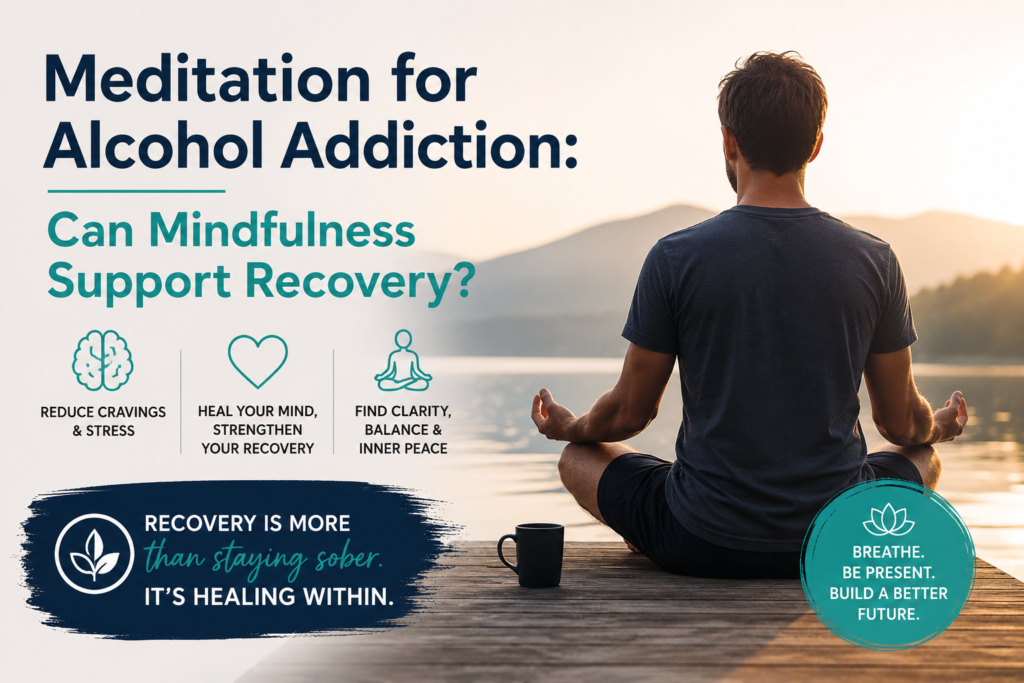
This is where meditation and mindfulness can play a valuable role.
While meditation is not a replacement for medical treatment, therapy, or professional addiction support, it can be a powerful tool that helps people develop greater self-awareness and emotional resilience during recovery.
Why Alcohol Addiction Is About More Than Drinking
Many people assume addiction is simply a lack of willpower.
In reality, alcohol is often used to:
- Escape stress
- Manage anxiety
- Numb emotional pain
- Deal with loneliness
- Avoid uncomfortable thoughts
The problem is that alcohol provides temporary relief while the underlying challenges remain.
As a result, the cycle repeats.
How Meditation Supports Alcohol Recovery
1. It Helps You Become Aware of Triggers
Many drinking habits happen automatically.
You feel stressed.
You reach for a drink.
Meditation helps create awareness between the trigger and the action.
That pause can be the difference between reacting automatically and making a conscious choice.
2. It Helps Manage Cravings
Cravings often feel overwhelming because people try to fight them.
Mindfulness teaches a different approach:
Observe the craving.
Notice the sensations.
Allow them to rise and fall without immediately acting on them.
Many people find that cravings become less powerful when they stop resisting them and start observing them.
3. It Reduces Stress Naturally
Stress is one of the most common reasons people turn to alcohol.
Meditation activates the body’s relaxation response, helping calm the nervous system and reduce emotional overwhelm.
When stress decreases, the urge to seek relief through alcohol may also decrease.
4. It Builds Emotional Resilience
Recovery often means facing emotions that were previously avoided.
Meditation helps people sit with discomfort without immediately escaping it.
Over time, this develops emotional strength and self-control.
5. It Improves Sleep and Mental Clarity
Many people in recovery struggle with:
- Restlessness
- Poor sleep
- Racing thoughts
Regular meditation can help calm the mind, improve sleep quality, and support overall well-being.
A Simple Mindfulness Practice for Cravings
When you feel the urge to drink:
- Stop for a moment.
- Take five slow breaths.
- Notice what you’re feeling emotionally.
- Ask yourself:
- Am I stressed?
- Am I lonely?
- Am I anxious?
- Observe the craving without judging it.
- Wait for two minutes before taking any action.
Often, the intensity of the craving begins to decrease.
What Meditation Cannot Do
It’s important to be realistic.
Meditation is a support tool, not a cure.
For people with alcohol dependence, professional treatment, counseling, medical care, and support groups may be essential parts of recovery.
Meditation works best when combined with a comprehensive recovery plan.
Can meditation cure alcohol addiction?
No. Meditation is not a cure, but it can help manage cravings, reduce stress, and support emotional well-being during recovery.
How often should I meditate?
Even 10–15 minutes daily can help build awareness and emotional resilience.
Can mindfulness help prevent relapse?
Mindfulness can help people recognize triggers, manage urges, and make more conscious decisions, which may support relapse prevention.
Conclusion
Alcohol addiction is often driven by stress, emotional discomfort, and unconscious habits.
Meditation helps address these underlying patterns by increasing awareness, reducing reactivity, and teaching healthier ways to cope with life’s challenges.
Recovery is not just about removing alcohol.
It’s about developing the inner skills needed to live well without it.
Ready to Learn Meditation at a Deeper Level?
If you’re interested in experiencing the transformative power of meditation—for yourself or to help others—join our 3 Day Meditation Trainer Bootcamp.
You’ll learn:
Practical meditation techniques for emotional well-being
How meditation supports healthier habits and mindset shifts
Foundations of teaching meditation confidently
How to build a meaningful path as a Meditation Trainer
👉 Register for the 3 Day Bootcamp: https://calmpreneur.in/cpmt
Learn Meditation. Practice Meditation. Teach Meditation. Become a Meditation Trainer.