

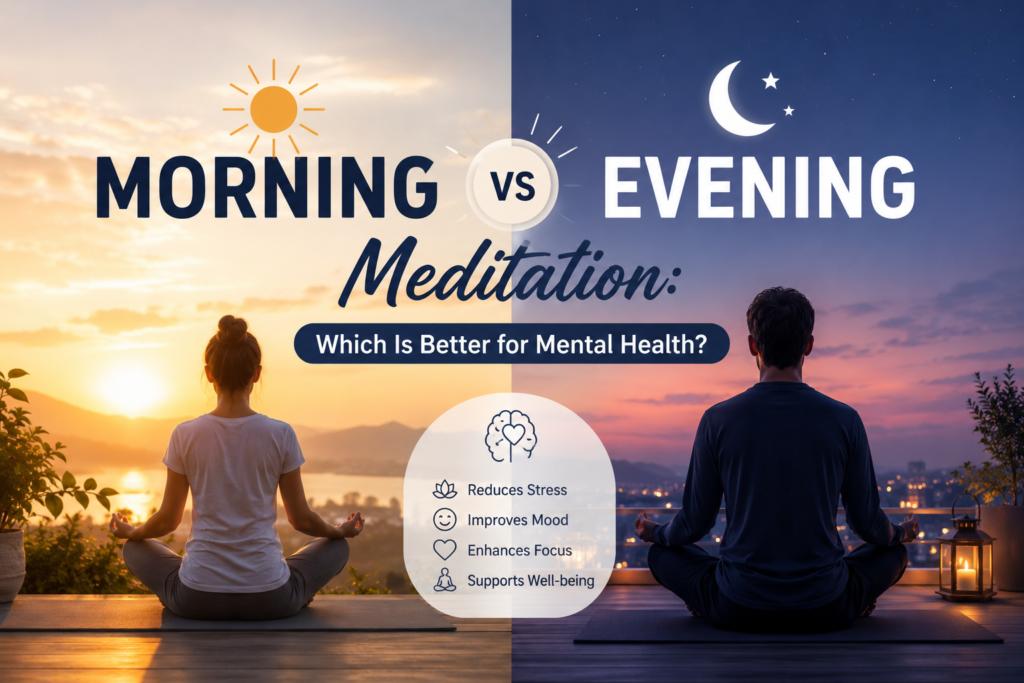
One of the most common questions people ask when starting meditation is:
“Should I meditate in the morning or evening?”
The truth is, both can be incredibly beneficial for your mental health—but they serve different purposes.
Morning meditation helps you prepare for the day ahead, while evening meditation helps you recover from the day you’ve had.
So instead of asking, “Which is better?” the more helpful question is:
“Which one supports my current needs?”
Let’s explore the benefits of both and help you find the right meditation routine for your lifestyle.
Why Timing Matters in Meditation
Meditation works by helping you:
- Calm mental chatter
- Reduce stress
- Improve emotional balance
- Regulate your nervous system
- Become more present
However, your mental state is different in the morning and evening, which means meditation can affect you differently depending on when you practice.
Benefits of Morning Meditation
Morning meditation is like setting the foundation for your entire day.
Instead of starting your day with notifications, worries, and mental noise, you begin with clarity and intention.
1. Reduces Morning Anxiety
Many people wake up and immediately start thinking about:
- Work
- Responsibilities
- Deadlines
- Problems to solve
Meditation helps calm the nervous system before stress takes over.
2. Improves Focus and Productivity
A calm mind is a focused mind.
Just 10 minutes of meditation in the morning can help:
- Improve concentration
- Reduce distractions
- Increase mental clarity
This can make your entire day feel more manageable.
3. Creates Emotional Stability
Life will always bring challenges.
Morning meditation helps you approach them with more patience and awareness rather than reacting impulsively.
4. Builds Consistency
Morning routines are often easier to maintain because fewer unexpected events interfere with them.
Many long-term meditators prefer mornings simply because it becomes a habit.
Benefits of Evening Meditation
If morning meditation prepares you for life, evening meditation helps you recover from it.
It’s particularly helpful for people who carry stress throughout the day.
1. Releases Built-Up Stress
Throughout the day, your mind collects:
- Worries
- Conversations
- Decisions
- Emotional tension
Meditation gives your mind a chance to let go.
2. Helps Reduce Overthinking
Many people struggle with racing thoughts at night.
Meditation helps slow down mental activity and creates space between you and your thoughts.
3. Improves Sleep Quality
One of the biggest benefits of evening meditation is better sleep.
When your nervous system is calmer:
- Falling asleep becomes easier
- Sleep becomes deeper
- You wake up feeling more refreshed
4. Encourages Reflection
Evening meditation allows you to process the day without judgment.
Instead of carrying stress into tomorrow, you create closure.
Morning Meditation vs Evening Meditation: A Comparison
| Morning Meditation | Evening Meditation |
| Boosts focus | Reduces stress |
| Creates positive momentum | Helps you unwind |
| Reduces morning anxiety | Reduces overthinking |
| Builds productive habits | Supports better sleep |
| Increases mental clarity | Promotes emotional release |
Which Is Better for Mental Health?
The answer depends on what you’re struggling with most.
Choose Morning Meditation If:
- You wake up feeling anxious
- You want better focus
- You struggle with consistency
- You want to start the day calmly
Choose Evening Meditation If:
- You feel mentally exhausted
- You overthink at night
- You struggle with sleep
- You carry stress from the day
The Best Option: Morning and Evening
If possible, practice both.
Even a simple routine can make a difference:
Morning (5–10 Minutes)
- Breath awareness
- Gratitude practice
- Intention setting
Evening (5–10 Minutes)
- Relaxation meditation
- Body scan
- Mindful breathing
This combination helps you start and end your day with balance.
Common Mistakes People Make
Waiting for the Perfect Time
The best meditation time is the one you can maintain consistently.
Meditating Only When Stressed
Meditation works best when practiced regularly, not just during difficult moments.
Comparing Your Routine to Others
Some people thrive with morning meditation.
Others benefit more from evening practice.
Your routine should fit your life.
Is morning meditation better than evening meditation?
Not necessarily. Morning meditation helps prepare you for the day, while evening meditation helps you recover from it. Both support mental health in different ways.
Can I meditate twice a day?
Yes. Many people find that a short morning and evening practice provides the best results.
How long should I meditate?
Start with 5–10 minutes daily. Consistency is more important than duration.
Which meditation is best for sleep?
Evening practices such as breath awareness, body scan meditation, and guided relaxation are excellent for improving sleep quality.
Conclusion
There is no universal “best” time to meditate.
Morning meditation helps you create clarity, focus, and emotional stability.
Evening meditation helps you release stress, reduce overthinking, and improve sleep.
The most effective meditation practice is not the one done at the perfect time.
It’s the one you actually do consistently.
Whether you choose morning, evening, or both, the real benefit comes from making meditation a regular part of your life.
Ready to Learn and Teach Meditation?
If you’ve experienced how powerful meditation can be for mental health, why not learn how to practice it deeply and guide others as well?
Join our 3 Day Meditation Trainer Bootcamp and discover:
How meditation improves mental health and emotional well-being
Different meditation techniques and when to use them
How to build a consistent meditation practice
The foundations of teaching meditation confidently
How to become a Meditation Trainer and create meaningful impact
👉 Register for the 3 Day Bootcamp: https://calmpreneur.in/cpmt